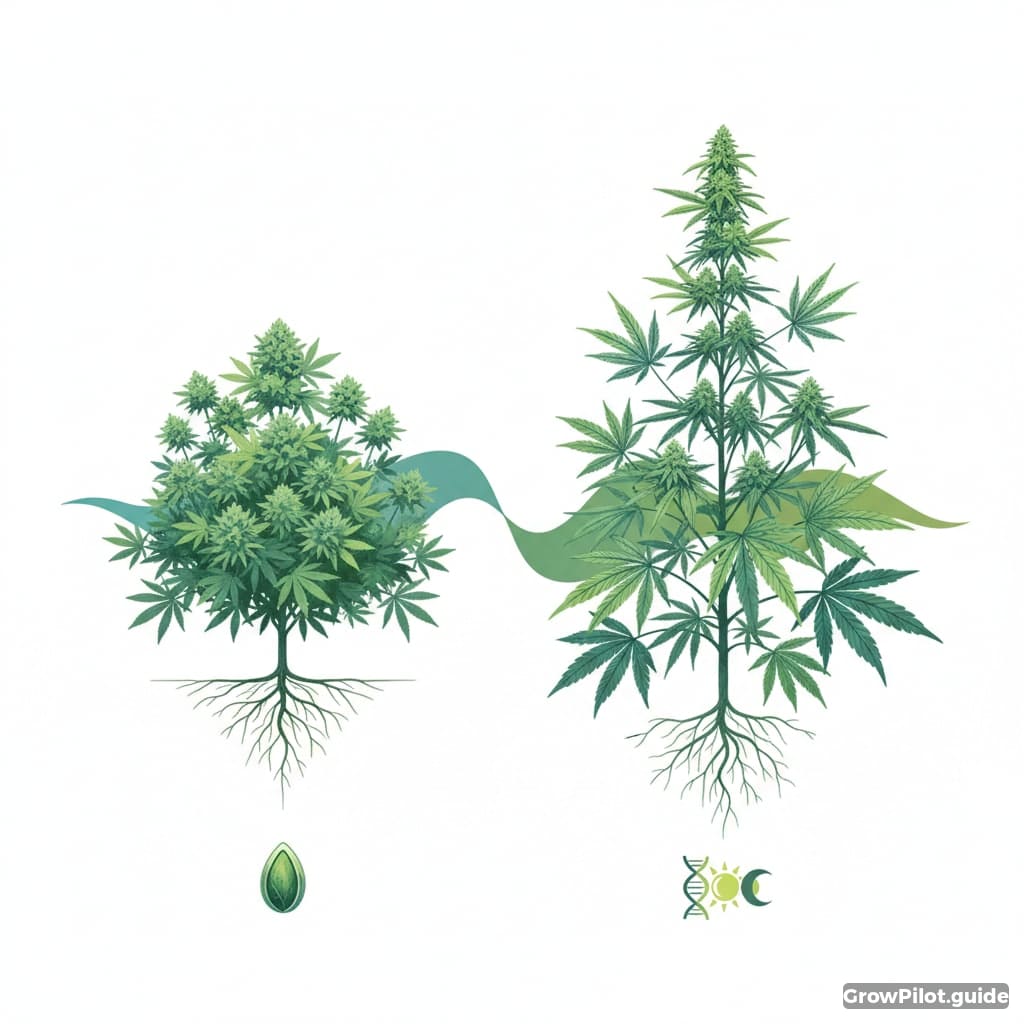
Amnesia: Genetics, Stretch, and Why It Needs Precise Guidance

Amnesia is one of the best-known Haze hybrids. This article explains its origin, growth, flowering, yield, terpenes, effects, and what growers should keep in mind regarding stretching and climate.
# Amnesia: Genetics, Stretch, and Why It Needs Precise Care
Amnesia has been one of the most internationally renowned Haze-dominant cannabis strains for many years. However, the name does not always refer to a single, clearly standardized line on the market. Variants such as Amnesia, Amnesia Haze, or regional selections with slightly different lineage appear in strain archives, seed bank catalogs, and grow reports. For growers, therefore, it is not so much the name alone that matters as the question of which characteristics are consistently described across many sources.
This consistent core is easily recognizable: Amnesia is usually classified as a Sativa-dominant hybrid with Haze influence, often with genetic components from Haze-, Skunk-, and Afghani-related lines, as well as, in some cases, additional influences such as Cinderella 99 or Jamaican and Southeast Asian components, depending on the breeder. It is precisely this genetic diversity that explains why flowering time, height, and aroma can vary noticeably among different Amnesia strains.
What is certain about Amnesia’s genetics?
Historically, Amnesia is not a clearly defined classic like a single, strictly documented clone-only line. Rather, it is a strain complex that emerged from European and U.S.-influenced Haze breeding. International archives such as SeedFinder, as well as breeder descriptions from companies like Royal Queen Seeds, Dutch Passion, and Barney’s Farm, consistently mention Haze lineage, often combined with elements related to Afghani, Skunk, or Northern Lights.
One thing is certain:
- Amnesia is generally strongly Haze-influenced
- many lines exhibit sativa-typical stretching and a longer flowering period
- the strain has been developed over the years in several parallel breeding programs
- varying interpretations of the strain circulate under the same name
How does Amnesia typically grow?
In everyday growing practice, Amnesia is very often described as vigorous, light-hungry, and prone to stretching. During the vegetative phase, many phenotypes develop a more open structure with longer internodes than compact Afghani hybrids. Once flowering begins, a noticeable stretch often occurs in the first two to three weeks.
Structure and Growth Habit
Typical characteristics of many Amnesia strains include:
- medium to tall final height
- pronounced apical dominance if not trained
- good lateral branching with sufficient light
- a somewhat airier plant structure than in compact Indica strains
- long colas that can become significantly denser in later flowering stages
Indoor, Outdoor, or Greenhouse?
Amnesia generally thrives in all three environments but has different requirements:
- Indoor: easy to manage if height, light intensity, and climate are carefully controlled
- Outdoors: suitable in regions with a sufficiently long, dry ripening phase
- Greenhouse: often particularly advantageous because it allows for a good combination of light utilization and protection from the elements
How long does Amnesia really flower?
This is where the differences between marketing claims and real-world experience become particularly clear. Some manufacturers cite relatively short time frames, but international grow reports and strain archives often indicate 10 to 12 weeks of flowering, and for some Haze-dominant phenotypes, even slightly longer. Faster strains can be ready in about 9 to 10 weeks under optimal conditions, but this is not the norm.
Important for growers:
- Photoperiodic Amnesia usually takes longer than classic Skunk or Afghani hybrids
- Harvesting too early often compromises aroma, density, and ripeness
- the strain is highly sensitive to light quality, temperature, and root space
What is a realistic yield?
Amnesia has a reputation as a high-yielding Haze strain, but only if the plant receives enough light, time, and space. Exaggerated catalog figures aren’t very helpful here. Realistic ranges based on grow reports are often:
- Indoor: about 400 to 550 g/m² under good conditions
- Outdoor: often 500 to 800 g per plant, and even higher for large, tall specimens
What flavors and terpenes are typical of Amnesia?
Amnesia’s aroma profile is described in many reports as citrusy, spicy, herbal, and slightly earthy. These are often accompanied by Haze-typical notes of incense, wood, or pepper. Depending on the strain, sweeter or slightly diesel-like undertones may also be present.
The following terpenes are frequently cited as dominant in lab profiles and breeder descriptions:
- Limonene for citrusy freshness
- Myrcene for earthy, herbal depth
- Caryophyllene for spicy, peppery notes
- sometimes Terpinolene or Humulene, depending on the phenotype
How do growers and users describe the effects?
Descriptions from archives like Leafly, forums, and breeder materials paint a relatively consistent picture: Amnesia is often described as mentally engaging, stimulating, clear to potent, and sometimes long-lasting. Many users mention creative, talkative, or focused phases, while others report an overwhelming intensity when using high-potency strains or unfamiliar dosages.
It’s important to keep this in perspective: Such descriptions of effects are subjective and depend on the chemovar, dose, method of consumption, individual tolerance, and environment. Additionally, manufacturers’ claims regarding very high cannabinoid levels should not be considered guaranteed; only concrete laboratory measurements of individual batches are reliable.
Why isn’t Amnesia considered the easiest strain to grow?
For many growers, Amnesia isn’t an “expert” strain in the strictest sense, but it’s often not the most beginner-friendly strain either. The main reason is its growth behavior. If you don’t carefully control height, climate, and nutrient application, you’ll quickly run into problems.
Typical Challenges
- Significant stretching after the transition to flowering
- Longer flowering period with increased space requirements
- Sensitive reaction to over-fertilization, especially with nitrogen-heavy feeding
- increased risk of air stagnation and humidity issues during dense late flowering
- inconsistent phenotypes in some seed lines
Which growing tips work particularly well with Amnesia?
Start canopy management early
Because Amnesia often stretches vigorously, early intervention is worthwhile:
- Topping or FIM during the vegetative phase can help distribute height more evenly
- LST helps break apical dominance
- SCROG works well with vigorous Haze hybrids because the shoots can be trained to spread out
Control the climate with precision rather than aggressively
Many growers have good results with moderate conditions:
- Vegetative phase: about 24 to 28 °C
- Flowering phase: around 21 to 26 °C
- Relative humidity roughly 60 to 70% for young plants, 50 to 60% during the vegetative stage, and 40 to 50% in late flowering
Fertilization with Care
According to many reports, Amnesia responds better to a controlled, moderate nutrient supply. Too much nitrogen during early flowering can further promote stretching and delay maturation. A gradual transition to a flowering-oriented nutrient regimen is usually advisable, rather than abrupt spikes.
Patience at Harvest
A common mistake is harvesting too early. Haze-dominant strains, in particular, often continue to visibly gain resin maturity, flavor complexity, and bud density during the final weeks of flowering.
Who Is Amnesia Best Suited For?
Amnesia is particularly well-suited for growers who:
- are looking for Haze aromas with citrus and spice notes
- know how to manage stretching
- are comfortable with longer flowering times
- prefer structured, well-lit setups
The bottom line is that Amnesia isn’t just a hyped-up strain—it’s a genetically influential Haze family with a distinct profile: vigorous growth, rich aroma, and often potent effects—but it’s only truly impressive when the grow is managed properly.