How to Choose the Best LED Lights for Cannabis Cultivation
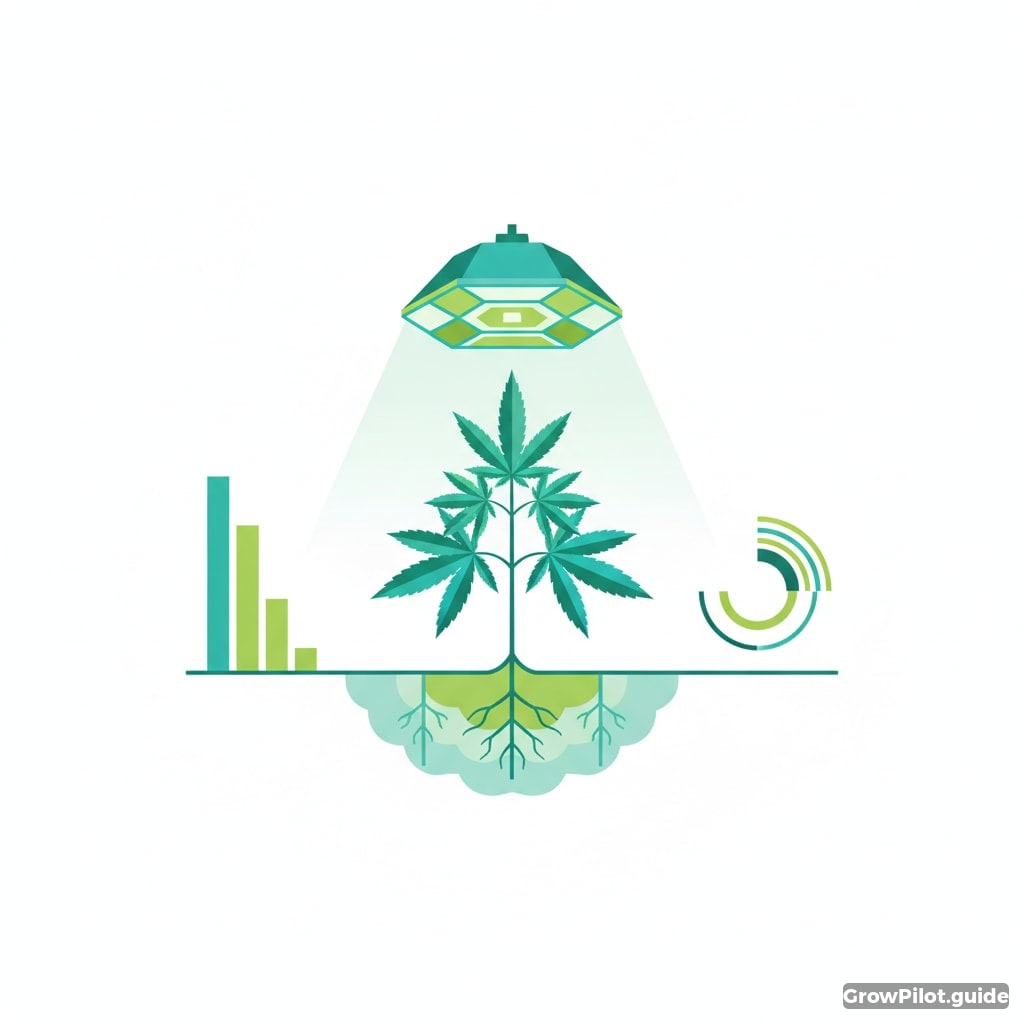
This practical guide shows you how to choose LED lights for cannabis cultivation based on PPFD, efficiency, coverage, heat, and safety—without falling for marketing gimmicks.
# How to Choose the Best LED Lights for Cannabis Cultivation
Since April 1, 2024, private cannabis cultivation for personal use has been permitted in Germany under the provisions of the Cannabis Act. Anyone growing legally indoors will quickly face one of the most expensive and important decisions when setting up: LED lighting. It’s not about buying the “most powerful” lamp, but rather the right one. A good LED light must be suited to the tent size, the number of plants, the growth stage, and heat dissipation.
For hobby growers, it’s important to remember: Plants don’t “see” a wattage label, but rather usable light in the photosynthetically active spectrum. Therefore, the most technically relevant factors are PPF, PPFD, efficiency in µmol/J, and uniform illumination. This also aligns with the current state of modern horticultural lighting, as described in the technical literature and by institutions such as the American Society of Agricultural and Biological Engineers, at universities, and in manufacturer tests from the professional plant cultivation sector.
What Makes a Good LED Light for Cannabis Cultivation?
The best LED isn’t automatically the most expensive model. The key factor is whether it distributes enough light evenly across your growing area without converting an unnecessary amount of electricity into heat.
Key metrics include:
- PPF: Indicates how many photosynthetically active photons the lamp emits per second.
- PPFD: Shows how much of that light actually reaches a specific area.
- Efficiency in µmol/J: Describes how efficiently electrical energy is converted into light relevant for plant growth.
- Light distribution: Even distribution reduces hotspots and dark peripheral areas.
- Thermal management: Good cooling protects performance and service life.
- Dimming function: Facilitates adjustment for young plants, growth, and flowering.
Which metrics are truly important when buying?
PPFD Instead of Focusing on Watts
A common beginner’s mistake is assuming that more watts automatically mean better plant growth. That’s an oversimplification. Watts only describe power consumption. What matters for plants is how much usable light reaches the leaf surface. That’s why you should look for PPFD charts—that is, measurement overviews of light distribution over a defined area and at a defined distance.
As a rough guide for indoor gardening, the following ranges are often used:
- Young plants and cuttings: relatively low light intensities
- Growth phase: medium intensities
- Flowering phase: higher intensities
Efficiency in µmol/J
Photon efficiency is key when it comes to electricity costs and heat generation. Modern, high-quality LEDs achieve significantly better values than older light sources such as HPS or many low-cost LEDs. Higher efficiency means:
- more usable light per kilowatt-hour
- less waste heat per photon generated
- often lower requirements for room cooling
Complete Manufacturer Specifications
Reputable products specify:
- Power consumption under real-world conditions
- PPF or PPFD measurements
- Measurement distance and measurement area
- Spectrum or spectral diagram
- Efficiency specifications
- Information on drivers, dimming, and protection class
Which LED format is right for your grow room?
Not only the amount of light, but also the design influences the result.
LED Boards and Bar Systems
Flat systems with multiple light sources typically distribute photons more evenly than compact point sources. This is particularly useful in grow tents because it ensures better illumination of the edges and reduces the likelihood of leaves being directly under a hotspot.
Advantages:
- More even illumination
- Often lower leaf surface temperature at individual points
- Well-suited for rectangular or square areas
Compact High-Power Lights
Compact lights can be useful when the area is small or when strong, centralized lighting is desired. However, they require more attention to the distance from the plant tips, because the intensity directly beneath the center can be significantly higher.
How Much Light Does Your Growing Area Really Need?
The right light fixture isn’t chosen based on the number of plants, but primarily on the growing area. Two small plants can occupy a similar area to a single large, trained plant. That’s why you should first measure the usable floor space.
Here’s a practical approach
- Measure the actual growing area in the tent or cabinet.
- Check the area for which the manufacturer provides PPFD values.
- Compare not only the average value but also the extreme values.
- Allow for extra space for lamp spacing and vertical growth.
- Opt for dimmable systems if you want to cover different growth stages with a single lamp.
Why Are Spectrum and Color Temperature Important?
Plants primarily use light in the range of about 400 to 700 nanometers for photosynthesis. Modern LED lights typically use full-spectrum designs, often supplemented with light in the deep-red range. For hobby growers, it’s important to note that a broad, horticulturally sound spectrum is usually more useful in practice than flashy marketing promises featuring many individual channels.
Studies in horticulture show that red and blue light are particularly relevant for photosynthetic and morphological processes, while other spectral components can also influence growth habit and leaf development. However, the optimal mix depends on the species, variety, and cultivation goal. Therefore, skepticism is warranted when a product makes a blanket claim that a specific color recipe is fundamentally superior to every other solution.
As a general rule:
- Full-spectrum LEDs are usually the most practical choice for beginners.
- Separate “bloom” or “veg” switches are not necessarily a sign of quality.
- Documented, consistent performance is more important than flashy effects.
What mistakes do beginners make most often when buying LEDs?
Buying based solely on wattage or price
Cheap options may seem attractive at first, but they can end up being more expensive due to poor efficiency, uneven lighting, and a shorter lifespan.
Underestimating heat generation
LEDs are efficient, but they aren’t “cold.” Drivers and diodes generate heat that must be dissipated from the room. Without proper ventilation, temperature and leaf stress will increase.
Choosing the wrong lamp spacing
Too little spacing can lead to hot spots, leaf stress, or stunted growth. Too much spacing reduces usable light intensity. The manufacturer’s specifications and the plants’ response are key factors.
Not planning for dimming
Young plants usually need significantly less light than plants in later stages. A dimmable light fixture increases flexibility and reduces electricity consumption in the early stages.
Ignoring safety considerations
Make sure to:
- ensure clean electrical work
- use a sturdy mounting system
- protect against moisture
- adequate ventilation for the driver
- no improvised power strips under watering areas
How to Make a Good Purchase Decision
If you’re looking for the best LED lights for cannabis cultivation, a short list of priorities is more helpful than advertising.
Pre-Purchase Checklist
- What area needs to be evenly lit?
- Are there PPFD maps for this exact area?
- What is the efficiency in µmol/J?
- Is the light dimmable?
- Does the design fit your tent?
- How is heat dissipated?
- Are the electrical specifications and test conditions clearly stated?
Conclusion
The best LED light for cannabis cultivation is the one that illuminates your growing area evenly, efficiently, and controllably. When comparing options, focus on PPFD, efficiency, coverage, dimming, and heat management rather than high wattage ratings or grandiose advertising claims. By carefully evaluating these factors, you can avoid common purchasing mistakes and create stable conditions for a legal indoor grow in accordance with German law.
Frequently asked questions about How to Choose the Best LED Lights for Cannabis Cultivation
When choosing an LED light for growing cannabis, what should I look for besides the wattage?
According to the article, PPFD, efficiency in µmol/J, and uniform illumination are more important than the wattage alone. Watts only describe power consumption, but what matters for plants is how much usable light actually reaches the leaf surface.
How do I choose the right LED size for my grow room?
The light should be selected primarily based on the usable area, not the number of plants. Measure the actual growing area, check the manufacturer’s PPFD specifications for that exact area, and compare the extreme values as well, rather than just the average.
Are full-spectrum LEDs a good choice for beginners?
Yes, the article generally describes full-spectrum LEDs as the most practical choice for beginners. Documented and consistent performance is more important than flashy marketing features.
What manufacturer specifications should a high-quality LED light have?
According to the article, reliable products specify, among other things, the actual power consumption, PPF or PPFD measurements, measurement distance and measurement area, spectrum, efficiency, as well as information on the driver, dimming capabilities, and protection class. If this data is missing, a reliable comparison is virtually impossible.
Why is thermal management important for LED lights used in indoor growing?
LEDs also generate heat—primarily through drivers and diodes—and this heat must be removed from the room. Without adequate exhaust ventilation, temperature and leaf stress can rise, which is why, according to the article, thermal management is a key selection criterion.